Gentle, Precise Treatment for Infants & Children
At Petaluma Kids Dental Care, Dr. Austin G. Nunez offers laser frenectomy procedures for infants and children diagnosed with tongue-tie (ankyloglossia) or lip-tie. Using advanced dental laser technology, we are able to provide a quick, gentle, and highly precise release with minimal discomfort and rapid healing.
Our goal is to support your child’s feeding, speech development, comfort, and overall oral health—while making the experience as calm and stress-free as possible for both children and parents.

A tongue-tie occurs when the tissue (frenulum) under the tongue is too tight or restrictive, limiting normal tongue movement.
A lip-tie happens when the tissue connecting the upper lip to the gums restricts normal lip mobility.
These conditions can affect infants, children, and even older kids in different ways.
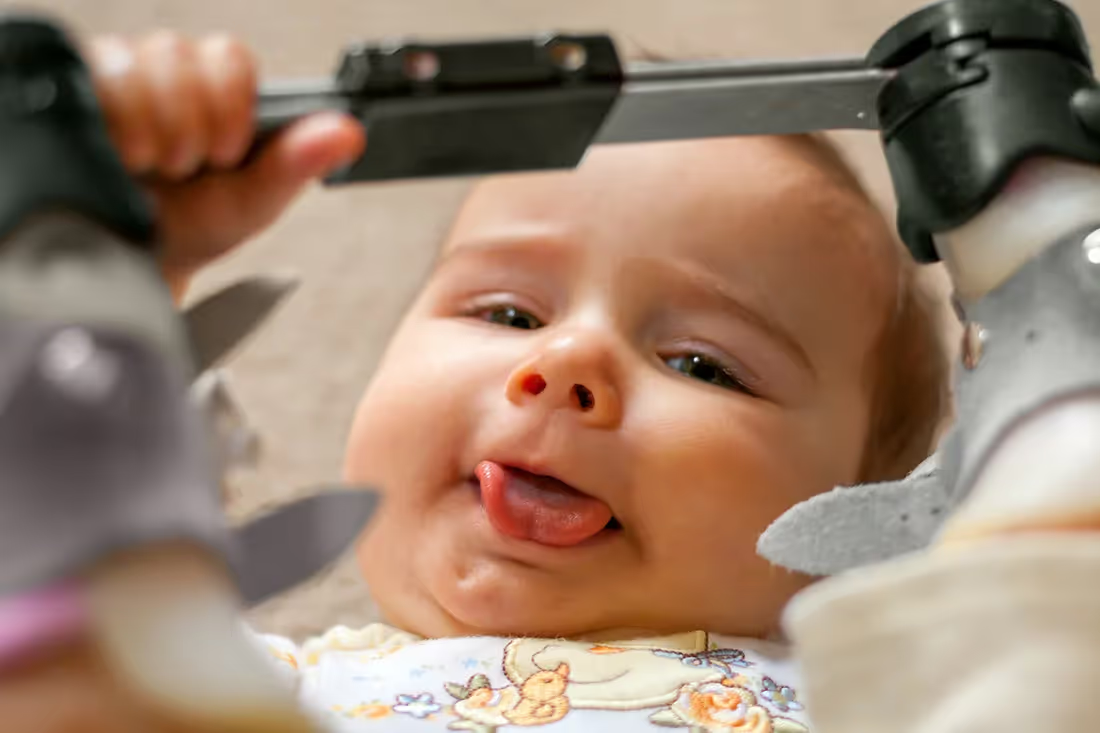

Tongue ties occur in 4-11% of newborns.
This is the differentiator paragraph copy. This is the differentiator paragraph copy. This is the differentiator paragraph copy. This is the differentiator paragraph copy.

Sometimes, getting started is the hardest part. We are here to help you take the first step with free frenectomy consults.
See real patient success stories.
Not all ties require treatment—but when function is affected, a laser release may be recommended.



We take time to explain every step so you feel confident and informed.
If you suspect your child may have a tongue-tie or lip-tie—or if you’ve been referred by a pediatrician, lactation consultant, or speech therapist—we’re happy to help.
📍 Located in Petaluma, CA – Sonoma County
🗓️ Request an evaluation today
Laser frenectomy services are provided after a comprehensive clinical assessment. Not all ties require release, and recommendations are individualized to each child.

Tongue and lip ties are collectively known as “tethered oral tissues” or TOTs. They occur when the bands of tissue that connect the tongue or the lips to the mouth become overdeveloped to the point that proper mouth movement is restricted.
Serious tongue and lip ties can make it hard for your child to breastfeed or use a bottle properly, resulting in poor feeding and inadequate nutrition. If you think that your child is having trouble feeding because of tongue or lip ties, you should get help from a laser-trained pediatric dentist right away.
In most cases, yes. Many infants breastfeed or bottle-feed immediately following the procedure.
No. Laser frenectomies do not require sutures for infants, but in some cases it is recommended for older children.
Healing is typically rapid. Some mild swelling or white healing tissue is normal. We provide detailed after-care instructions and support throughout the healing phase.
Yes. When appropriate, we collaborate with lactation consultants, speech-language pathologists, and other providers to ensure the best outcome for your child.
Coverage varies by plan and diagnosis. Our team is happy to help review benefits and discuss payment options.
Evaluations can be done at any age—from newborns to older children. Recommendations are based on function, not age alone.
Feeding problems are the most common signs of tongue and lip ties. Your child’s lips and tongue need to be able to move properly to latch onto the nipple and stimulate it for proper feeding. If they seem to be having trouble making a proper seal, milk dribbles out from their mouth while feeding, or they frequently stop and start feeding, they may be having latching issues due to tongue or lip ties.
You can also look for visual signs of tongue and lip ties. For the lips, you can fold back your child’s upper lip and look at the frenulum. If it is difficult to lift the lip or it seems like your baby is unable to move their upper lip on their own, they may have a lip tie.
Signs of tongue ties include an inability for your child to stick their tongue out past their front teeth, or problems moving the tongue from side to side. Tongue ties can also be identified visually. A common sign of tongue ties is a “heart-shaped” tongue. When your child sticks their tongue out, the restriction caused by the tongue tie may cause it to look “notched” or heart-shaped, instead of appearing as a smooth “U” shape.
To care for the surgical site, you will need to clean the treatment area twice a day to prevent infection and keep it healthy. Your child’s dentist may also recommend some stretches for the tongue and/or lips. These stretches will help ensure that when the frenulum heals, it will not reattach and restrict your child’s oral range of motion. Follow the instructions given to you and make sure you regularly perform all stretches recommended to you by your child’s dentist.
Frenectomies are usually identified in infants and young children before they grow older, so the treatment is primarily done on younger children. However, it’s not exclusively provided to infants and young children. Older kids, teenagers, or even adults who have tongue or lip ties may be able to benefit from treatment with a frenectomy if they have serious tongue or lip ties.
No. Many children have oral ties that do not cause functional problems. Treatment is recommended only when a tie is affecting feeding, speech, oral function, or comfort.
The procedure is very quick and typically causes minimal discomfort. Infants often cry briefly due to being swaddled rather than pain, and most are able to feed immediately afterward. Older children generally tolerate the procedure very well.
The actual laser release usually takes only a few minutes or less. The entire visit includes evaluation, explanation, and post-care instructions.


.webp)
.webp)